Showing posts with label Ernest Hemingway. Show all posts

Friday, November 22, 2013

Daily Links 11-22-13

Five for Friday: a roundup of links today on writing (plus a bonus recommendation on how to deal with rejection).

**************

From Brain Pickings: Ernest Hemingway's advice for aspiring young writers. This includes a great excerpt from Ernest Hemingway on Writing. Be sure to scroll to the end of the post for links to more writing advice.

**************

How to write things the people you lead will want to read. This is a great article including three common mistakes people make and how to fix them.

**************

Since 2005, the SAT has included an essay section. What's the key to doing well on this part of the test? Make stuff up!
This essay, which was added to the SAT in 2005, counts for approximately 30 percent of a test-taker’s score on the writing section, or nearly one-ninth of one’s total score. That may not seem like much, but with competition for spots at top colleges and universities more fierce than ever, performance on a portion of the test worth around 11 percent of the total could be the difference between Stanford and the second tier. So it’s not surprising that students seek strategies and tips that will help them succeed on the writing exercise. Les Perelman, the recently retired former director of MIT’s Writing Across the Curriculum program, has got a doozy. 
To do well on the essay, he says, the best approach is to just make stuff up. 
“It doesn’t matter if [what you write] is true or not,” says Perelman, who helped create MIT’s writing placement test and has consulted at other top universities on the subject of writing assessments. “In fact, trying to be true will hold you back.” So, for instance, in relaying personal experiences, students who take time attempting to recall an appropriately relatable circumstance from their lives are at a disadvantage, he says. “The best advice is, don’t try to spend time remembering an event,” Perelman adds, “Just make one up. And I’ve heard about students making up all sorts of events, including deaths of parents who really didn’t die.” 

As a result, the SAT is helping us create bad writers.

**************

A related problem is that college graduates don't know how to write.

Our graduates lack writing skills. While adept at crafting bullet points, they often have difficulty writing in declarative sentences and complete paragraphs – thus impeding the effectiveness of their business communications, including memos, letters, and technical reports. 
A 2004 Conference Board survey of 120 corporations in the Business Roundtable concluded that most companies take written communications into consideration when making their hiring and promotion decisions and implied that many current or prospective employees lack the requisite skills. This conclusion was reinforced by a 2006 Conference Board survey of 431 human resource professionals, which cited writing skills as one of the biggest gaps in workplace readiness. 
Recent graduates also frequently commit basic grammatical errors, such as using an improper pronoun (e.g. “between you and I”) selecting the wrong homonym (e.g. “compliment versus complement”) or employing incorrect diction (e.g. “appraise versus apprise”). Not coincidentally, these kinds of errors are difficult to catch with spell-check. 

**************

But there is hope. Here are 10 tips how to write less badly.

**************

As an added bonus, a great quote from Barbara Kingsolver on dealing with rejection:


Friday, November 08, 2013

Daily Links 11-8-13

A bookish roundup of links to start off your weekend: a cool bookmark, why you should write in your books, a really neat audiobook you can listen to for free, and more.

*****************

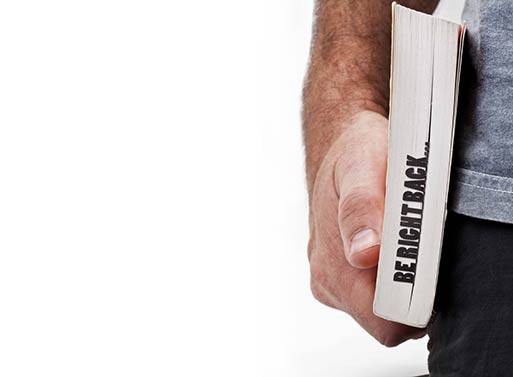
I love this bookmark....


You can find more neat designs here. (Hat tip: Book Riot)

*****************

Here are five reasons you should write in your books. I've never been in the habit of writing in my books but this makes a fairly good case for doing so.

****************

Although C. S. Lewis is probably best known as a theologian I think his fiction books are his best works. One of my personal favorites is The Screwtape Letters. One of the earliest audio editions was narrated by none other than John Cleese. You can listen to all of it for free here.

***************

Ernest Hemingway is arguably one of the greatest writers of the 20th Century. Although he never wrote about how to write fiction he did mention the subject in a number of letters, articles, and books. Here are seven of his best tips on how to write fiction.

***************

Here's a terrific list of books on reading and writing.

***************

If you live in Copperas Cove, Texas, you better return your books to the library on time or end up in jail:

An ordinance adopted by the City of Copperas Cove could mean an arrest for patrons if they don't return library materials.
A recent case landed one man behind bars for a book he'd had checked out for more than three years.
On Wednesday Jory Enck was booked into jail and released for overdue library materials.
Court documents show he checked out a GED study guide in 2010 and didn't respond to attempts from the library to get the book back.

I have heard of extreme penalties for overdue library books but this seems like a little bit much.

***************

Fans of Jane Austen beware: there is a new updating of Sense and Sensibility coming to bookshelves soon. While it's a popular thing to attempt, there are several pitfalls writers would do well to avoid.

***************

Here's a list of 9 books that you should drop everything to read right away.

***************

This is without a doubt one of the coolest bookstores you're likely to find anywhere. The Dutch really know how to make the most of an abandoned church:


Details (and more photos) here.

Monday, September 30, 2013

Daily Links 9-30-13

Ernest Hemingway's Reading List for young adults, just because a book is labeled "young adult" doesn't mean you should ignore it, Instragramming your meal, and more in today's link roundup.


********************

Ernest Hemingway once wrote out a reading list for a young man. But that's only the beginning of the story.
(Hat tip: Buzzfeed)

********************

Young Adult Fiction is better than you think. Or as my daughter (who pointed this out to me) put it, a good story is a good story.

********************

Disney quote of the day:


*******************

Want to Instragram your meal? Bobby Flay is okay with that:

“Listen, if you want to come to my restaurant, where you’re paying for your meal, and you want to take a picture of my food and advertise it all over the world and the internet, be my guest,” Bobby responded.

Hat tip: Food Riot

*******************

When someone says to you, "God Told Me", how do you react?

Hat tip: Blogging Theologically

*******************

No Shirt, No Shoes, No Sagging, No Service? (via Food Riot)

Friday, September 27, 2013

Daily Links 9-27-13

Harnessing the power of introverts, the dangers of busyness, how a 1940's actress helped develop wireless technologies we enjoy today, and more in today's link roundup.

*****************

One the best books I have read lately is Susan Cain's Quiet: The Power Of Introverts In A World That Can't Stop Talking. This article neatly summarizes her findings in the book and how businesses can apply its lessons.

*****************

Three dangers of busyness. This looks like it's going to be a great book.

*****************

Some fascinating facts about Walt Disney World that you may not know.

*****************

Did you know that a 1940's Hollywood star helped make wireless technologies possible? It's a fascinating story.

*****************

Recreating Ernest Hemingway's hamburger recipe. (Hat tip: Food Riot). I have to say that this looks delicious and may be well worth a try.

*****************

Victor Davis Hanson on the decline of college:

For the last 70 years, American higher education was assumed to be the pathway to upward mobility and a rich shared-learning experience. Young Americans for four years took a common core of classes, learned to look at the world dispassionately, and gained the concrete knowledge to make informed arguments logically.
The result was a more skilled workforce and a competent democratic citizenry. That ideal may still be true at our flagship universities, with their enormous endowments and stellar world rankings. Yet most everywhere else, something went terribly wrong with that model. Almost all the old campus protocols are now tragically outdated or antithetical to their original mission.
Be sure to read the whole thing.