Showing posts with label Hugh Hewitt. Show all posts

Thursday, April 10, 2014

Daily Links 4-10-14

In today's edition: Victorian Buzzfeed, memorable quotes from children's literature, chatting with George F. Will, Tom Hanks and Walt Disney, and more.

*************

This is really cool: 25 Stages From Courtship to Marriage. Or, Victorian Buzzfeed. (Hat tip: Acculturated)
Photo Credit: The Public Domain Review

*************

The myths of success that hold us back from being really successful.

*************

Hugh Hewitt chatted with George F. Will, author of A Nice Little Place on the North Side. I am reading the book now and it is fantastic. (Audio at the link)

Related: George Will sang during the 7th inning stretch last Sunday. The Cubs won the game. Good luck charm? Ironic considering that Will says Harry Caray is responsible for him becoming a Cubs fan.

*************

The odd off-season jobs of 10 Baseball Hall of Famers. There was a time before baseball players got rich just playing the game that they had to do something else in the off-season to make ends meet. Fascinating stuff.

*************

Hard to believe that thirty years ago Tom Hanks was an unemployed actor. But one thing helped him make it through the hard times. No surprise that it helped serve as an inspiration for one of his most memorable roles.

*************

Quotes from classic children's literature:


20 inspiring children’s book quotes.
Courtesy of: Quotery

Monday, January 06, 2014

Daily Links 1-6-14

Godd morning! In today's edition: Hugh Hewitt on living The Happiest Life, Sherlock Holmes the scientist, don't waste you weaknesses, essential books on the American Revolution, and more.

*****************

National Review's Kathryn Jean Lopez interviews Hugh Hewitt about his newest book The Happiest Life. Related: my review of the book. It was also one of my favorite books I read last year.

*****************

John Piper encourages us to not waste our weaknesses:

What is your goal in 2014? I hope it is to be humble and to magnify the power of Christ. If it is, then one key strategy is to identify and exploit your weaknesses. 
What does this mean? Negatively, it means that we stop complaining (to God and to people) about the things we are constitutionally not good at. And, positively, it means that we look for ways to turn our weaknesses into a Christ-exalting experience. 
When I say “constitutionally not good at,” I mean that we have done our best to overcome the weakness, but we can’t. God has ordained that, through genetics or life-experience, we are limited, broken, weak. Paul asked that God would take his weakness away (verse 8), but God said no. Which means that sooner or later, we should stop praying against the weakness and accept it as God’s design for our humility and the glory of Christ.

Hat tip: Challies

**************

How Sherlock Holmes is the archetypal scientist.

**************

A symposium on the essential titles to read about the American Revolution. (Hat tip: Washington's Library). I would recommend David McCullough's 1776 and John Adams, David Hackett Fischer's Washington's Crossing, and Jeff Shaara's two Revolutionary War novels Rise to Rebellion and The Glorious Cause as a good place to start.

**************

What does the future hold for libraries in the digital age? Here are five possibilities.

**************

Joe Carter offers a more unconventional (and possibly more practical) method for reading the Bible:

A few years ago I stumbled across a variation of the four steps in an article by theologian Fred Sanders and implemented his recommendation that day. I later had the pleasure of meeting Sanders in person and telling him how his post had transformed my life. My hope is that at least one other person will follow this advice and experience the same transformative effect.
Before I reveal the four steps I want to reiterate that while the advice could transform your life, it likely will not. As with most life-altering advice, it is simple, easy to implement, and even easier to ignore. Statistically speaking, the odds are great that you'll ignore this advice. 
But a handful of you will try it so for the one or two people who will find this useful, the four steps that will transform your worldview are:
1. Choose a book of the Bible.
2. Read it in its entirety.
3. Repeat step #2 twenty times.
4. Repeat this process for all books of the Bible. 
Christians often talk about having a Biblical worldview yet most have only a rudimentary knowledge of the Bible. They attempt to build a framework without first gathering the lumber and cement needed to create a solid foundation. The benefits of following this process should therefore be obvious. By fully immersing yourself into the text you'll come to truly know the text. You'll deepen your understanding of each book and knowledge of the Bible as a whole.

Tuesday, December 31, 2013

Favorite Books of 2013

At the beginning of the year I set a goal for myself to read 25 books this year and blog about each one. Of course I did neither of those things. However, I did manage to read a few books this year that really had an impact on me. The following list (in no particular order) are the books that I read this year that stood out as my favorites. Not all of these books were published this year but were simply books I read during the year.


Mansfield's Book of Manly Men by Stephen Mansfield

Our culture has tried to redefine what it means to truly mean to be a man to the point that most men don't know what is expected of them. What does it really take to be a man? How can a man become his most masculine self? These are the questions that Stephen Mansfield addresses in this excellent book. It is a call to action for men everywhere to become the men that they are supposed to be. I heartily recommend this book.


A Higher Call by Adam Makos

As a history buff, I enjoy hearing stories of our past particularly those set against the backdrop of World War II. I think we often make the mistake of thinking that all Germans were Nazis and that there were no men of honor in their armed forces. Not true as we find out in this excellent book. This is a story about honor that we don't hear about much anymore. A small gesture in the midst of battle would forever change the lives of two men. This is a book that reads more like a novel than non-fiction.


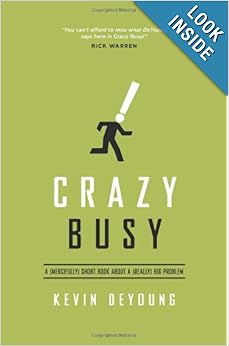
Crazy Busy by Kevin DeYoung

Busyness is a trap that we all seem to fall into. Technology that is supposed to make our lives easier only compounds the problem. How do we become so frightfully busy? More importantly, what do we do about it? Kevin DeYoung offers some insight into the sin of busyness and challenges  us to think about how we use our time to avoid the trap of being too busy.


The Happiest Life by Hugh Hewitt

Those who are living truly happy lives are those who live their lives as givers. There are gifts that they give to others that serve as an encouragement to others and at the same time enrich their own lives. As we enter 2014, pledge to become a giver of the gifts that Hugh Hewitt outlines in this book. Follow the examples he provides through numerous personal anecdotes and see the tremendous change that will come about as a result.


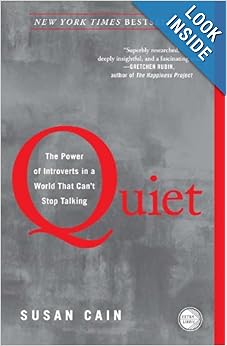
Quiet: The Power of Introverts in a World That Can't Stop Talking by Susan Cain

Our world cherishes and applauds the extrovert. We have this false picture that in order to be successful in life we need to be outgoing and gregarious all the time. But there is great power in being an introvert. In fact, introverts should be embracing who they are and realize there are tremendous assets in having an introverted personality. I found this book particularly encouraging as it helped me realize it was not only just okay to be an introvert but it is something I should embrace and use to my advantage.

Monday, December 30, 2013

Book Review:The Happiest Life by Hugh Hewitt


What are the hallmarks of someone who is truly happy? How can you tell that someone has a happy life? More importantly, how can you achieve that same happiness in your own life?

These are all questions that radio talk show host and blogger Hugh Hewitt addresses in his latest book The Happiest Life which will be released on January 7th.

In the first half of the book, he focuses on the characteristics that exemplify someone who not only is happy themselves but is also concerned with increasing the happiness in others. Those gifts are encouragement, energy, enthusiasm, empathy, good humor, graciousness, and gratitude. Through a number of personal stories he provides concrete examples of individuals who personify each of these gifts.

In the second half, he turns his attention on the givers explaining how the gifts are incorporated into the lives of individuals as parents, spouses, teachers, family members, friends, co-workers, and even as churches.

As I was reading through the book I found the numerous anecdotes and personal experiences from over a decade in talk radio. No doubt Mr. Hewitt has had some amazing opportunities to converse with a broad range of fascinating individuals. As a keen observer of human behavior he has been able to use those experiences to draw out the lessons of the book.

But the most important point he makes is the one that is absolutely inescapable: true happiness cannot be achieved apart from a relationship with God through Jesus Christ. If Christ is dwelling within you than these gifts will naturally spring forth from you to those around you.

A life of significance is one that is lived for others rather than oneself. In The Happiest Life, Hugh Hewitt has not only shown us how this is possible but has given us numerous tangible examples of how that life is being lived by others. We would do well to learn the lessons from this book and commit to being the type of giver that he describes in this book. I heartily recommend The Happiest Life.

Note: An advance electronic copy of the book was made available by the publisher for this review. No consideration was received apart from the book in exchange for this review.