Cartoonist Johnny Hart who was the creator of the comic strip "B.C.", died suddenly yesterday at the age of 76. His strip, which featured dinosaurs and prehistoric cavemen has appeared in newspapers all over the world since 1958. But the most important thing about Hart was that he was a committed Christian and would often incorporate Christian themes into his strips as can be seen in today's strip whch is fitting given that today is Easter Sunday.
He will truly be missed.
UPDATE: Michelle Malkin has a fitting tribute that is worth reading in it's entirety.
Sunday, April 08, 2007


Friday, April 06, 2007
IPod a Life Saver?
According to these photos an Ipod that Kevin Garrad had in his coat pocket during a recent mission in Tikrit slowed down a bullet fired at close range just enough to prevent it from piercing his body armor. The photos (particularly the close up of the damaged Ipod) are pretty amazing.
It's story worthy of Mythbusters. In fact, the same person who posted the photos on Flickr has submitted the story to the show. Wouldn't it be great to see this story put to the test?
Hat tip: Michelle Malkin
It's story worthy of Mythbusters. In fact, the same person who posted the photos on Flickr has submitted the story to the show. Wouldn't it be great to see this story put to the test?
Hat tip: Michelle Malkin
Wednesday, April 04, 2007
"House" and Abortion
Last night, "House" (Tuesdays, 9 p.m. Eastern on Fox), showed why it is by far one of the best dramas on television in an episode that dealt with abortion in a way unlike any other show on television ever has before.
The episode opens with celebrity photographer Emma Sloan (who happens to be five months pregnant) coming to the hospital after suffering a stroke. After running a series of tests, House comes to the conclusion that it is the baby that is making the mother sick. The mother is dying and if the baby isn't delivered she will die. House is in essence, arguing for aborting the baby to save the mother. But Sloan wants to keep the baby and challenges House to find a way to save them both. The highlight of the episode is a scene involving an operation on the baby that no doubt was inspired by this famous incident that causes House to rethink his position not only on abortion but realize that he was dealing with a real human being and not just a clump of tissues.
This marks the second time this year that the show has tackled the subject of abortion. In another episode, House encounters a rape victim who became pregnant as a result. House argues that the best thing to do is terminate the pregnancy. While the girl resists at first she eventually decides to have the abortion.
The producers of "House" should be commended for tackling such a controversial subject. While the episodes may not necessarily change anyone's mind, they at least provide a good place to start a conversation on this subject.
Tuesday, April 03, 2007
At Least He Can Poke Fun At Himself
President Bush has had to deal with more criticism than any president in recent memory. In spite of all the negative press, he still has managed to keep his sense of humor:
Hat tip: Two or Three.net
Hat tip: Two or Three.net
Monday, April 02, 2007
Wrongfully Accused
Eric Volz is an American reporter who was living in Nicaragua. On November 21, 2006, his girlfriend Doris Jiminez was brutally murdered in San Juan del Sur. At the time of the murder, Volz was two hours away in Managua. Despite a mountain of evidence that should have exonerated him, he was sentenced to thirty years in prison. The video below tells his story in more detail:
His parents have also appeared on NBC's Today Show to draw attention to the story.
The family and friends are asking people to contact their Senators and Representatives. More information about the case can be found at the Friends of Eric Volz website.
Hat tip: Stacy Harp
His parents have also appeared on NBC's Today Show to draw attention to the story.
The family and friends are asking people to contact their Senators and Representatives. More information about the case can be found at the Friends of Eric Volz website.
Hat tip: Stacy Harp
Saturday, March 31, 2007
Great Baseball Books
Just in time for Opening Day (which is Monday) here is a list of the five best baseball books from former Commissioner Fay Vincent.
Tuesday, March 27, 2007
Cool Link
Here's a cool link to add to the blogroll: Curt Schilling has a blog. Visit early and often.
In a recent post, this question from a fan elicited a great answer:
Couldn't have said it any better myself.
Hat tip: Dean Barnett
In a recent post, this question from a fan elicited a great answer:
Q-I WAS WONDERING IF YOU COULD PLEASE TALK MORE ABOUT BECOMING A CHRISTIAN AND HOW IT AFFECTS YOU ON A DAILY BASIS. ARE THERE OTHER RED SOX PLAYERS THAT ARE CHRISTIANS AS WELL?
A-There are many of us on the team. As far as how it affects me on a daily basis I am not sure there’s any way to put it other than it affects everything about me, everyday. It doesn’t imply what people that are not Christians seem to think it does. Which is to say it doesn’t preclude me from saying dumb things, making stupid mistakes, thinking bad things, to me it’s the foundation on which I am trying to build something lasting and meaningful to the people I know, and that know me.
Couldn't have said it any better myself.
Hat tip: Dean Barnett
Monday, March 19, 2007
Interview: Margaret Kerry, Model for Peter Pan's Tinker Bell
The first thing Margaret Kerry will tell you about herself is that she is a talker. This is not a huge surprise since she has had an extensive career in radio and voice-over work for various animated productions. But the role she is best known for is one that she didn't even receive credit for nor did it require her to say anything: Tinker Bell from Disney's Peter Pan.
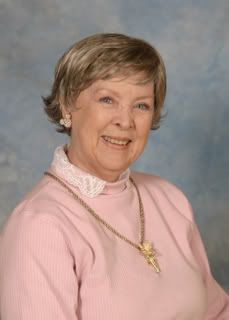
Margaret Kerry. Photo courtesy of Disney.
Mrs. Kerry started her acting career at the age of four as a fairy, ironically enough, in A Midsummer Night's Dream with Mickey Rooney. She would later work with Rooney again on National Velvet doubling for Elizabeth Taylor in several scenes. By the time Peter Pan rolled around, she had already established herself as an actress and dancer when she received the call that would literally change her life.
"I was working at Fox as an assistant dance director and I got a call from my agent that they were doing interviews for this reference model for a 3 1/2 inch fairy who didn't talk. I got home and thought how in the world do you show your stuff when it's a fairy who doesn't talk? So I went into my records and had one that was instrumental and stayed up and choreographed fixing breakfast: getting up, walking to the kitchen, going over, looking into the refrigerator, getting out the eggs, juggling them on the way over to the stove. Of course there was nothing there. It was all pantomime."
"I took my record player with me over to this very tiny office. I put the record on and did it for them. I think they were a little taken aback. So then they said 'What we want to do is this scene where she lands on the mirror and preens herself and then she measures her hips.' And I said, 'Oh, I can do that.' I did it for them and I learned later that one of the reasons they hired me was I looked down through the mirror which wasn't there and back up. They could see the difference in my face. I figured that Tinker Bell had never seen a mirror before. They hadn't thought about that. To me, all of these things are so new to her and that's what makes her so beguiling. She has never seen a jug before so she get's inside it according to the book. She's never seen a mirror before. So now she's preening and she's never seen her hips before. That's what they saw that I was able to bring: this other dimension to her that they really hadn't thought about.”
“Tinker Bell was a throwaway character. They were not going to do much with her. First of all, she really did not fit in the era. Wendy was the character that was in the culture, the demure, helpful female that was the mother type. They had had Cinderella and Snow White and along comes this cury thing who is independent, starting to find out what life is all about. She is adventurous and no one is going to tell her what to do.”
Clearly, Ms. Kerry’s ideas about the character helped transform her from a minor player to a major part of the story. She would go onto the soundstage and act out different scenes for the animators so they would know how to draw the character. I asked her how difficult it was to act out the sequences that only the animators would see.
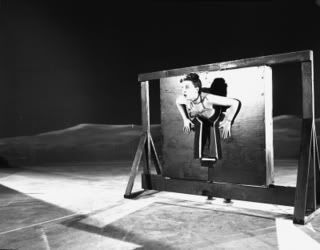
Margaret Kerry (Live Action Reference Model for Tinker Bell) © Disney. All Rights Reserved..
“It was not difficult because I believed in (Directing Animator) Marc Davis. He could explain what he wanted and I, as a female, having gone through so much of this, as an actress, a pantomimist, and as a dancer could put it all together. I knew when he got to what he wanted when he would say ‘Let’s film that’. He was an enthusiastic, delightful genius.”
Little did she know that this 3 ½ inch fairy would become as closely associated with Walt Disney as Mickey Mouse. I asked her how Tinker Bell managed to become such a Disney icon.
“It wasn’t until the people at Disney Studios (they thought Disneyland was going to be an abysmal failure and he was going to lose all his money) asked him not to use many licensed characters at the parks because they made money out of licensing Minnie, Mickey, and the others. So they sent Roy Disney in to talk to him about it. Walt said, ‘I’ll take it under advisement’. A couple of days later he said ‘Tell them I’m going to use Jiminy Cricket and Tinker Bell. Will that satisfy them?’ And Roy said yes. That’s why Tinker Bell came to life in the park.”
“And then, of course, Mr. Disney made the greatest decision of his life. He had Tinker Bell open up his television shows and she would take us all to magical places. And I thought he was a genius for doing that.”
It seems a little ironic that the role for which Ms. Kerry is best known is one she was never credited for on screen. It was this lack of screen credit that likely fed one of the wild rumors that circulated shortly after the film’s release: Marilyn Monroe was the model for Tinker Bell.
“Marilyn Monroe wasn’t even known in 1953. A couple of people who have been at Disney all these years suspect there was a radio interview done and somebody said that Tinkerbell was curvy like Marilyn Monroe and we think that somebody picked up on that and put it in an article.”
As it turns out, she had her own close encounter with Marilyn Monroe a couple of years prior to Peter Pan. “She came to Fox. She had just been signed as a starlet and we were doing a bathing suit layout with about 60 other girls. We all fell in love with her. She was just darling and so sweet. We knee she was our main competition. You could just tell it. We didn’t mind. There was no backbiting.”
“She was sitting around a table with an umbrella over it and we were waiting for the photographer to do a new setup. We were talking about that we didn’t go out in the sun because it was bad for our skin. I said, ‘For the first time my camera has film in it. Can I take a picture of you?’ She looked at me and she said, ‘Only if I can take a picture of you.’”
One of the other common misconceptions about the film has to do with Ms. Kerry’s alter ego and her feelings toward Peter. When Wendy arrives in Neverland, Tinker Bell gets mad and the assumption is that she is jealous of her because she is in love with Peter. Not so, says Ms. Kerry. “She’s gone on adventures with Peter before and has had all of his attention. Then this big, ugly girls comes along and gets the attention. She is provoked. She doesn’t know what jealousy is really if you asked her. She just knows that she wants the attention back. Other movies have said she was in love with Peter. But she doesn’t know what love is. In today’s world she would be called a groupie.”
Speaking of groupies, Ms, Kerry says she still gets a lot of mail from men especially who relay the feelings they have had for the little fairy. “You don’t know how many letters and e-mails I get from men who say they were in love with her from the first moment they saw her. They’re always a little bit hesitant to say it. She can’t possible hurt you. What a good person to be in love with!”
“I’ve had men who have walked up to me at Disneyana shows and said ‘I have to tell you, Margaret, I’ve been in love with you since I was five years old’. And I said, ‘Fine. I’m not doing anything next Tuesday. Let’s get married.’”
Though she wasn’t given credit for her work as Tinker Bell, she’s still very proud of the movie and says that it has still retained its magic after all these years. “I hadn’t seen the film in 12 or 15 years (until a recent screening as part of the DVD release promotion). I realized how much fun this film is. This is a happy, magical film. The audience was in stitches. They were laughing at the crocodile. The crocodile should be menacing. But it’s so funny. Everything that they did in it could have been dark, ugly, mean and scary. It was funny. They did the greatest job and I think that right now, we need a happy, magical film from the greatest classical animation company in the world: Disney, and it’s this remastered film. It’s really something to watch. I forgot since I hadn’t seen it in so long. You walk out of the theater singing and happy and talking about, I hope, Tinker Bell.
Peter Pan is now available in a new 2-disc DVD from Disney Home Video.
This article originally appeared at Blogcritics.
Saturday, March 17, 2007
Fred Thompson, Presidential Candidate?
One of the most intriguing potential presidential candidates hasn't even declared yet and is having an effect on the race: former Republican Senator Fred Thompson. John Fund of Opinionjournal.com has a terrific interview with Mr. Thompson in which he discusses a possible presidential run.Personally, I hope he will run simply because it will vastly improve the field of potenital candidates.
Thursday, March 08, 2007
DVD Review: Peter Pan
One of our family's favorite Disney movies is Peter Pan. The timeless story about a boy who doesn't want to grow up is one that we never get tired of watching. When I heard that Disney was going to release the movie in a new 2-disc edition I wondered whether it would be worth owning especially since I already had the VHS and earlier DVD version of the movie. Once I saw everything that had been added for this new edition I was blown away.
The film itself has never looked better. The updated digitial remastering of the video as well as the home theater Surround Sound mix have both dramatically enhanced the movie.
The second disc offers a number of terrific bonus features that will enhance the viewing experience. For the first time, viewers will get to hear in Walt Disney's own words "Why I Made Peter Pan". There is also the alternate opening to the film in "The Peter Pan That Almost Was". The photo gallery features storyboards and live-action reference photographs that were found in the Disney archives. Also included is a 1952 featurette "The Peter Pan Story" and a look at the many different variations the story took on during production and why it took so long (16 years!) to bring the movie to life.
Music also plays an important part in this movie. Viewers will get to hear the songs that didn't make it into the film (as well as the concept art for those numbers). T-Squad performs "Second Star to the Right" in what clearly is a Disney Channel music video.
But the brightest spot musically speaking is a new song that was written by Richard Sherman, legendary Disney composer. The lyrics to an unfinished song were found in the archives. Sherman was commissioned to compose the music. The end result is a marvelous ballad which is beautifully performed by Paige O'Hara (the voice of Belle in Beauty and the Beast).
Anyone who is a fan of Peter Pan or is being introduced to the movie for the first time will thoroughly enjoy this DVD. The continuing appeal of this film should be enhanced by this 2-disc set.
This article was originally published at Blogcritics.
Tuesday, March 06, 2007
Interview: Kathryn Beaumont, Voice of Peter Pan's Wendy
Kathryn Beaumont started her career as a child actress in England before MGM signed her to a contract and brought her family to Hollywood. Little did she know at the time that would lead to a meeting with a Hollywood legend: Walt Disney. 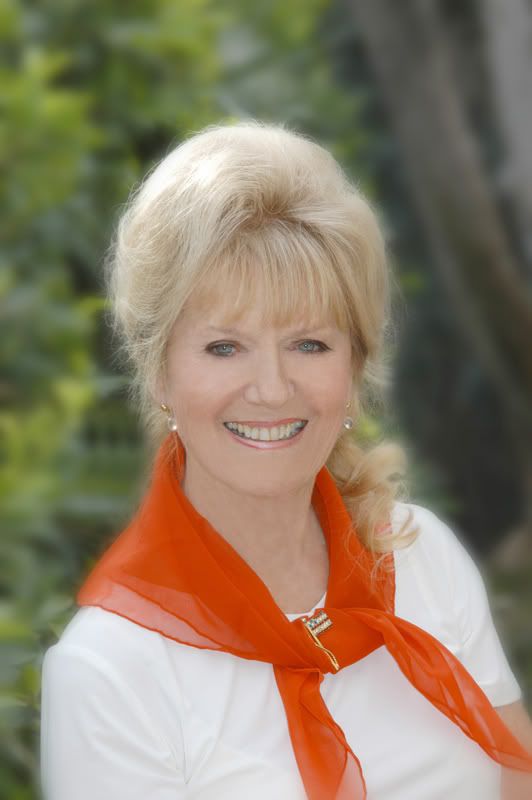
Kathryn Beaumont
Shortly after arriving in Hollywood, Disney put out a casting call for a new animated feature: Alice in Wonderland. Ms. Beaumont was eventually cast as Alice and it led to a face-to-face meeting with Disney. "I was very awestruck because the first time I met him was when we went in to sign the contract [for Alice in Wonderland]," Ms. Beaumont recalled during a recent interview. "We were going to go up to Walt's office and meet him. I was very nervous because he was a person who was so well-known all over the world. But I realized he was an easygoing person, an everyday person and he wasn't the icon in the office, the head of the studio you never saw. He was very much a part of the studio and made himself known and seen. He sat down on the couch with me and with the [Alice] book and started talking to me about what was happening in the book and how they were going to interpret some of the scenes. He was so relaxed with me and it made me feel much, much better. I liked him a lot."
Disney apparently liked what Ms. Beaumont brought to Alice in Wonderland enough that he cast her as Wendy Darling, the oldest of the children that fly off to Neverland in Peter Pan. But, she explained, her job involved more than just providing the voice for Wendy.
"They would invite me to come up and sit in on storyboard conferences and there was a reason for that in that they wanted me to understand what the scene was about and understand every aspect of it where my experience with MGM had been that you got your little script and you memorized your lines and you really didn't have an idea what the story was about - you just knew that scene. So there wasn't really an understanding and a following through of what was going on in the film. At Disney, the fact that I would go in and watch how the storyboard was evolving and what the character was going to be doing, I was better able to play the role more realistically. They accepted me as one of the team though I was one of the littlest people there. Because of that, they made me feel comfortable, an important part of it all."
Providing the voice for Wendy was only about half of what was required of her and the other cast members. The other, lesser known aspect, is that the actors were also the live-action models for the animators.
"I started out doing the voice and then the animators wanted me to do the live action as well because that was the reference work for the artists to be able to see the way the human figure was moving. So we would record first and then go to the soundstage and it would be filmed but basically just for the animators. Their seeing my movement and the way that I interpreted the character, they would look at that and then that gave them the help that they needed to draw the character."
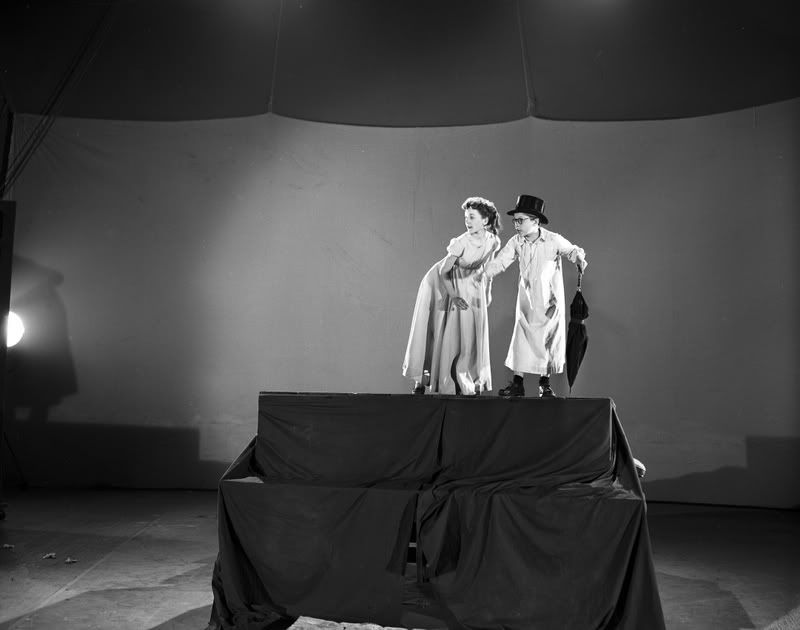
Live Action reference shot (Kathryn Beaumont as Wendy Darling, Paul Collins as John Darling). © Disney. All Rights Reserved
With the new 2-disc DVD release from Disney, a whole new generation of viewers will get to enjoy this movie. I asked Ms. Beaumont what has made this such a timeless story.
"It's because it's such a timeless story and it's an adventure. Children obviously love anything that have to do with adventures that they have and the fantasy that goes along with that. Then there's the concept of the little boy who didn't grow up and that concept that's developed through the story. The conflict of growing up and then looking back, being a mature person and thinking back to the time when you were carefree and could have fun and there was no responsibility as opposed to the little boy who wanted to live that way forever. It's that concept we can all relate to in our lives. The story itself has that but it also has these wonderful characters, adventure and lots of humor. Every generation comes by and is intrigued and thoroughly entertained by it from one generation to the next no matter what things have been going on in our lives over the decades."
"The fact that I at such a young age had this opportunity to do something so very special and it's even more special because these films have come back again and again. I never suspected that would happen and how fortunate I am that I am part of it and can still be part of the legacy that was Disney. I am proud to be part of what he created."
This article was originally published at Blogcritics.
Saturday, March 03, 2007
Book Review of the Week
Thanks to Lyn Perry at Thought Renewal for selecting me as their guest book reviewer of the week. Be sure to stop by and check out their terrific blog.
Friday, February 23, 2007
A Twist on Reading a Good Book
Brittany Shahmehri shares her family's twist on reading a good book in a recent article in the Christian Science Monitor. (Hat tip: Al Mohler). This sounds like a tasty idea:
We have a tradition of trying foods from the books we read aloud. It started when we read Elizabeth Enright's "The Saturdays," and one of the boys asked, "What are petit fours?"
An answer, my husband and I felt, wouldn't be as good as a sample. So one Saturday we all sat down to tea and little cakes, iced in pink, green, and yellow. It was exciting for the boys to try a dessert they had learned about in a book.
Later, when we read C.S. Lewis's "The Lion, the Witch and the Wardrobe," we had Turkish delight. "I don't think I would betray my brothers and sisters for this!" said one child.
We read "The Penderwicks," written by Jeanne Birdsall, and had gingerbread. We read Paddington Bear and tried marmalade.
The world that a good book creates is whole and real, but it lies flat on the page until a reader animates it. Stories, when read, are visceral: We believe in the characters. We can see their lives, hear the things they hear. We can almost taste the food they eat. Almost. Because while stories are visceral, they aren't tangible. Petit fours, however, are tangible.
Monday, February 19, 2007
Discovering William Wilberforce
Until recently, I knew very little about William Wilberforce, the British member of Parliament who led the campaign to abolish the slave trade in the British Isles. Now, his story has been made into a new movie, Amazing Grace, that looks like it's going to be fantastic. We're planning on taking our daughters and going to see it this weekend (it opens Friday).
As preparation for the movie, we took the time to read John Piper's book Amazing Grace In the Life of William Wilberforce (free- Adobe Acrobat Reader required) together. It's a great overview of Wilberforce's life and provides tremendous insight into the passion that drove his campaign to end slavery.
I'm also planning on reading two other related books. The first is Amazing Grace: William Wilberforce and the Campaign to End Slavery by Eric Metaxas. This is the companion biography to the film.
The second (which is heavily excerpted in Piper's book) is William Wilberforce's A Practical View of Christianity. Wilberforce wrote the book to speak out against what he saw as nominal Christianity of his day. Sadly, many of the problems he cites in his book (which was first published in 1797) are still true today.
Take the time to go and see this important movie. It is a story that needs to be told not only because of what Wilberforce accomplished but about what his life teaches us about what it means to truly serve Christ.
Friday, February 16, 2007
10 Movies I Never Get Tired of Watching
I love to watch movies and there are a handful that anytime they are on television I'll stop and watch them no matter how many times I've seen them before. I own most of them so anytime I'm in the mood to see one I'll pop it into the DVD player. Here are 10 movies that I never get tired of watching. I've listed them below in no particular order:
Rear Window (1954, not rated)
James Stewart is a photographer sidelined by a broken leg who has nothing to do but watch his neighbors out the rear window of his New York apartment. But he ends up seeing more than he bargains for and ends up getting mixed up with a murderer. The elegant Grace Kelly is Stewart's love interest in one of Alfred Hitchcock's best movies.
To Catch a Thief (1955, not rated)
A series of jewelry thefts on the French Riviera starts rumors that the notorious Cat Burglar (Cary Grant) has come out of retirement. The trouble is, he's innocent and no one believes him. As he desperately tries to clear his name he meets up with a rich young heiress (Grace Kelly). Is she interested in helping him or is she more interested in love? It was while filming this movie that Grace Kelly met Prince Ranier of Monaco whom she eventually married.
North by Northwest (1959, not rated)
Considered by many to be one of Hitchcock's finest films, it is a classic example of mistaken identity. Cary Grant portrays Manhattan ad executive Roger Thornhill that manages to innocently get mistaken for spy George Kaplan. After narrowly escaping an attempt on his life, Thornill sets out on a cross-country trip to clear his name and solve the mystery of who George Kaplan really is. This is suspense at it's best.
Charade (1963, not rated)
A film that could have easily been directed by Alfred Hitchcock was actually directed by Stanley Donen. Audrey Hepburn is the widow of a mysterious man murdered on a train. Others who knew her husband are after money they insist is theirs but that she insists she doesn't have. Cary Grant is the man who comes to her rescue to sort everything out - or is he? Wonderful plot twists all through the film, a marvelous cast (including Walter Matthau in a surprisingly sinister role) and wonderful on-screen chemistry between Hepburn and Grant make this a true gem.
Apollo 13 (1995, PG)
The Apollo 11 moon landing in 1969 was a huge accomplishment for all of the folks at NASA and it had captured the imagination of the world. But just a few months later by April 1970, the third moon landing was considered merely routine. As it turned out, nothing would be routine about this mission as disaster struck just 3 days into the flight. This is the true story of that voyage and the courage of not only the astronauts but everyone behind the scenes at NASA that made it possible for the crew to make it home safely. Wonderfully directed by Ron Howard and featuring a first-rate cast including Tom Hanks, Bill Paxton, Kevin Bacon, Gary Sinese, and Ed Harris this is a fascinating look into the space program during NASA's heyday.
The Great Escape (1963, not rated)
Perhaps one of the greatest movies about World War II ever made, this film tells the true story of the Allied prisoners who staged a mass escape like no other from Germany's Stalag Luft III in March 1944. Sturges and his crew went to great pains to get the details right including bringing one of the former prisoners to the set as a consultant. The film is a marvelous tribute to the ingenuity and courage behind one of the most amazing prison breaks in history.
The Pink Panther Strikes Again (1976, PG)
Peter Sellers portrayed the bumbling Inspector Clouseau five times on film but this installment of the series is by far the best. His former boss, Chief Inspector Charles Dreyfus (wonderfully portrayed by Herbert Lom) has escaped from a mental asylum and intends to kill Clouseau - no matter what it takes! Hilarity ensues as Clouseau manages to survive multiple assasination attempts. Many laugh out loud moments are in this film and the jokes are still funny even after seeing it multiple times. If you had to watch only one of the Pink Panther movies, this should be the one.
It's A Mad Mad Mad Mad World (1963, not rated)
The movie starts off simply enough: a man runs off the road in a car accident. Several people are there to see the accident. When they go down to find out the driver's condition he tells them a secret before he dies: a hugh stash of money is buried in a park. Quickly it becomes a mad dash to see who can get to the money first. Boasting a huge cast, this movie contains appearances from a veritable who's who of film comedians. It's a funny, funny movie on a grand scale that is unlikely to be duplicated ever again.
That Touch of Mink (1962, not rated)
Doris Day is the naive small-town girl that has a run-in with big time operator Cary Grant. Love is sure to blossom. Or is it? This is another terrific comedy that is made most special by it's supporting cast: Gig Young, Audrey Meadows, and John Astin who are all wonderfully cast.
The Princess Bride (1987, PG)
Throw together a little swordplay, pirates, revenge, giants, an evil prince, a beautiful princess, rodents of unusual size, a magician, a little kissing and you've got the formula for a perfect fairy tale. This film has more great lines than any other film I think I have ever seen. Except for some brief language this is a film that has everything for the entire family to enjoy.
Monday, February 12, 2007
Playing Golf With My Daughter
This spring, I made it my goal to teach my oldest daughter (who is 11) to play golf. Encouraged by friends who also play, she has developed a very natural swing and it looks like she'll be able to pick up the game quickly. This is a good thing since her dad normally can't break 100 on a good day. I have my doubts about my abilities to teach her how to play but I will at least give it a try.
I first learned to play golf from my dad when I was about 6 years old. When I was younger, he and I would play together often while we were on vacation. At least we did play until it got to the point that I would beat him regularly.
I still play occassionally but not very often and certainly not enough to develop any consistency in my game. But that's not the point.
The point is that by teaching my daughter to play golf it will allow us to do something we can enjoy together for the rest of our lives. It will allow us to have time together as father and daughter as we play this wonderfully maddening game.
Golf will also allow me to teach her about honor, perserverance, success and failure all at the same time.
Golf is unique in that there is no referee. Each person must learn to play honestly if they wish to be successful.
Golf is also a unique test of one's patience and perserverance. In a split second a seemingly brilliant shot can be ruined by a bad bounce. Golf is cruel in how it tests a player's mettle. But those who can handle the ups and downs of the game are more likely to be successful in handling the ups and downs that life throws at us. A golfer must learn to play the ball as it lies meaning you take what you get and deal with it as best as you can.
I'm hoping that my daughter will enjoy playing the game as much as I do. It is a skill once learned that can provide a lifetime of enjoyment. More importantly, I hope that she learns the lessons that the game has to teach us. Those lessons learned from golf serve us well in life also.
This post originally appeared at DadBloggers.
Saturday, February 10, 2007
Christians and Elections
For better or worse, the 2008 Presidential election campaign is already underway. While it's too soon to be thinking too much about specific candidates (I think there were at least 12 candidates the last time I counted), there are things Christians can be thinking about as they try to make wise decisions about who to vote for next year. Mark Daniels has an excellent series on the criteria that Christians should be using in approaching the election. (Hat tip: Hugh Hewitt)
Thursday, February 08, 2007
Quick Takes
Random thoughts including interesting items surfin' the blogs....
C. S. Lewis and Calvinism....Mark Dever sifts through some letters written by Lewis to discover what he thought about the key points of Calvinism. An interesting read.
It's an issue that hits a little too close to home since I was personally involved once in a situation involving plagiarism in the pulpit...still it's terrific insight on a growing problem in the church.
I'm just trying to imagine how my life might have been different before I got married if I had received this kind of sound advice.
Just finished reading....A Man on the Moon by Andrew Chaikin. Perhaps the most thoroughly detailed history I have ever read on the Apollo moon landings. A must read for anyone who wants to learn more about the people that made one of the greatest achievements of history possible.
Also just finished reading....First Off The Tee by Don Van Natta, Jr. A wonderful look at Presidents and the game of golf. A key quote from legendary golfer Jimmy Demaret: "If the people wish to determine the best candidate [for president], put all the contenders on a golf course. The one who can take five or six bad holes in a row without blowing his stack is capable of handling the affairs of the nation." Not a bad idea.
Speaking of Presidential politics....I really wish this guy would run. I'd vote for him in a heartbeat.
While we're at it...any chance we can make this happen?
James Lileks has found the solution to the childhood obesity problem.
House is one of my favorite television shows (and one of the best on the air). However, I didn't know it could be used as a way to illustrate fallacies with certain doctrines such as the way Strange Baptist Fire did with the doctrine of free will. (Thanks to Mike for the tip)
Each month, 9 Marks offers free interviews with leading pastors, theologians, and evangelical leaders (free to download). This month's interview is with Joshua Harris and is well worth the listen.
Fun with audiobooks...we just finished listening to Lemony Snicket's A Series of Unfortunate Events on audio. The books are extremely smart and well-written, chock full of literary references throughout the entire series. Most of the books are read by Tim Curry (and those are by far the best of the series).
Just finished reading to the kids...Peter and the Shadow Thieves by Dave Barry and Ridley Pearson. The second of the Peter Pan "prequel" novels (the first was Peter and the Star Catchers) is another delightful adventure involving pirates, a desert island, some strange creatures and the mysterious starstuff. These are great books to read aloud to your kids. The final installment is supposed to appear this fall and we can't wait.
Fun (but not necessarily real) technology: The Fundamentalist answer to the iPod. (Thanks Mike for the tip)
Finally, here's a sure-fire way to save money on groceries.
Wednesday, February 07, 2007
The Screwtape Letters as a Movie?
Walden Media, the company behind the film adaptation of C. S. Lewis' "The Lion, The Witch, and the Wardrobe" and "Prince Caspian" (currently in production) has signed on to take on another of Lewis' classic books (hat tip: Justin Taylor):
Anyone who has read the book (and it is among my favorites of Lewis' works) can see the difficulties that the producers will have in trying to weave this into a coherent story for film. It will be fascinating to see if they can pull it off. I hope they do.
Walden Media, the family-friendly and just-a-bit religious company behind The Chronicles of Narnia, has announced plans to make another, non-Narnia film based on the works of CS Lewis. But this time, it’s the turn of The Screwtape Letters.
The book takes the form of a series of letters from an experienced demon called Screwtape to his young protégé, Wormwood. Set against a background where demons, out in the world, attempt to turn people away from faith and generally cause mischief, the letters highlight examples of human weakness and chinks in people’s faith that the young demon can take advantage of in order to corrupt and weaken those he targets.
It’s a little difficult to see how it would be turned into a film with an actual plot, and there remains the problem of getting the (probably) religious target audience to go see a film about a demon, but it’s an undeniably interesting read and a humourous look at human foibles, so it could work very well, even for those who are less than committed to any religion at all.
There’s no word yet on a writer or director, let alone cast, but it’s to be produced by Fantastic Four producer Ralph Winter, along with Randy Argue and CS Lewis’ stepson Douglas Gresham.
Anyone who has read the book (and it is among my favorites of Lewis' works) can see the difficulties that the producers will have in trying to weave this into a coherent story for film. It will be fascinating to see if they can pull it off. I hope they do.
Tuesday, February 06, 2007
Finding a Church
For the past year, we have been without a church home. In other words, we're not currently part of a local body of Christians where we serve and worship regularly. Naturally this is not what we desire for our family. We want to be and need to be part of a local church.
But how do you find a church? How do you determine what criteria to use in determining whether a particular church is right for you?
As I was pondering these questions, I ran across this article from Stand to Reason that nicely summarizes the four factors that should be considered in choosing a church.
First, does the church have a high view of the Scriptures? Is the Bible treated as the Word of God and that is authoritative? Is Bible study a central activity of the church? If the church has a high view of Scripture you can bet there is a lot of time in energy spent on study and application of God's Word.
Second, is the church a place where you can be useful? Too often Christians view church membership as a one-way relationship meaning they are taking in all they can without giving back to the church. Church should be a place where you can be used.
Third, is the church a place where you can be accountable? Church is not simply a place to show up on Sunday morning for worship. It is a place to build relationships with fellow believers who you can encourage and be encouraged by as we walk together as brothers and sisters in Christ.
Finally, is the church a place where you can be fed? This, for me, is a question to be answered before I can determine whether the church is a place I can be useful. If I'm serving without being nourished spiritually at the same time I'll burn out quickly. So it is just as important to make sure that the church is a place that we can be fed. We need to have the freedom to worship God without worrying about what others may think. We need to be challenged by the teaching we receive.
Subscribe to:
Posts (Atom)