Showing posts with label writing. Show all posts

Friday, January 31, 2020

Weekend Links 1-31-20

Each Friday I feature links to articles of interest that I have found. Here is this week's edition for your weekend reading enjoyment.


The weekend is coming up which means it's more than likely you will have brunch at some point over the next couple of days. Have you ever thought about the origin of the term brunch? This article will help. 

So you want to read more books? Here are some ways to make that happen. Some of these suggestions to similar to ones that I offered in a recent post. Related: How to read 100 books in a year.

Here's a potential money saving tip: a new browser extension will let you know when new books are ready for checkout at your local library. 

Prohibition seems like ancient history. Did you ever stop to think why there is no anti-alcohol movement? 

I wouldn't want to discourage anyone from writing but it's likely you don't have a book in you.

Our family watches a number of Korean dramas so naturally we were interested in seeing the movie Parasite while it was still in the theater. It's an extremely well made film and hopefully will win a number of Oscars. While it is not necessarily an entertaining film it is certainly thought provoking. We have been discussing it off and on for days after seeing it. This review explains why the film resonates so deeply with the audience. Related: a profile of the film's director Bong Joon Ho. Also don't miss this: The Oscars need Parasite more than Parasite needs the Oscars.

This is certainly the funniest thing I read this week. I think it's because it is so spot on: Your Guide to Not Getting Murdered in a Quaint English Village.

Personality tests such as the Enneagram are all the rage these days but they don't excuse your sin. 

New research suggests procrastination is about managing your emotions not your time. Interesting stuff.

Another new study suggests skipping the easy tasks and tackling the hard stuff first. I've always heard the opposite is true that it's better to tackle easy tasks first to build momentum to handle the harder tasks. I think I will have to put this into practice to see if it works.

I appreciate the honesty in this column: things I wish I had done differently when I homeschooled. (Hat tip Susan Wise Bauer) Both of these perspectives highlight one of the unique joys of homeschooling: there is no right or wrong way to do it. You can tailor your homeschooling experience to you and your child's needs.

This year marks the 75th anniversary of the liberation of Auschwitz. At the time many pledged a catastrophe such as the Holocaust would never happen again. Sadly, political conditions are such that many worry that it will.

Sunday the Super Bowl will be played in Miami. Dave Barry has some helpful tips for fans visiting Miami for the game. 

And finally, my favorite tweet of the week:

Full disclosure: @designingannie is my oldest daughter. As you can imagine, I am a very proud father.

Friday, April 06, 2018

Weekend Links 4-6-18

A random collection of links for your weekend reading:

ICYMI: my review of Brad Meltzer's The Escape Artist is here.

This is one of my favorite stories of the week. A couple decided to open an independent book store in Ann Arbor, Michigan. One of its more notable features is a typewriter in the store available for anyone to use. Those contributions have been collected and published in a book.

Uncovering the secret of Chick-Fil-A's success.

Ranking the best westerns ever made.

Once a rare sight, the C-flap is becoming more common among baseball hitters. Here's the story of how it came to be. 

Want to be a better writer? Study the habits of these famous writers.

This made me laugh out loud.

How to beat the Facebook algorithm by becoming your own curator. I don't really use Facebook for much of anything (except for friends who still want to stay in touch). It's definitely not the site to use to curate news.

Tweet of the week (watch the catcher carefully):

Friday, January 12, 2018

Weekend Links 1-12-18

A ton of links of interest in this week's roundup:

I am at heart a frustrated writer. Part of the reason for resurrecting the blog was to get myself to write again even if it's no more than these Weekend Links posts I put up every Friday. I'm fascinated by people who are successful writers particularly when they've tried something else and given it up to be a writer. That's probably why this interview with Robert Kurson caught my attention. I haven't read his books yet but they will be going on my to be read list right away. 

From Barnabas Piper, ways to become a more curious person. Lots of great food for thought in this article.

This seemed very timely given events in the news of late: Why repentant pastors should be forgiven but not restored to the pulpit. Wise words from Johnathan Leeman.

Season 2 of The Crown on Netflix explores Queen Elizabeth's faith and a meeting she had with the Reverend Billy Graham. The question is whether any of it is true. Sarah Pulliam Bailey has the answers.

In the film Darkest Hour the producers went to great lengths to make Winston Churchill's secret war rooms look as realistic as possible. 

This is a story I had never heard: the Swiss man who saved thousands of Jewish people from the Holocaust during World War II.

Russell Moore answers the question of whether we are living in a post-Christian society.

Where I would say that we're a post-Christian society is that we're a post-pretend-Christian society. There was a previous era when people had a certain basic understanding of biblical truths and some connection to the church. That brought some benefit because, in many cases, there was some sort of stable understanding of morality. But, it also brought a lot of drawbacks because a nominal Christianity doesn't save.

Often what a nominal Christianity does is the worst possible thing: leave people in lostness but convince them that they're reconciled with God. I do think we're moving beyond that kind of Christianity. That's going to mean a lack of cohesion in the country and in some communities.
Be sure to read the whole thing.

Good to know: how winter weather affects your car and what you can do about it.

Baseball season is almost upon us. Safe to say I will be checking this opening day countdown clock regularly. 

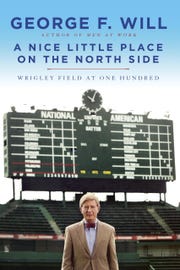
Speaking of our national pastime, this is an amazing piece of baseball history:

Merkle's mistake would help the Chicago Cubs advance to the 1908 World Series. Despite the infamous miscue, Merkle would go on to have a very nice twenty year career in the major leagues including four years with the Cubs.

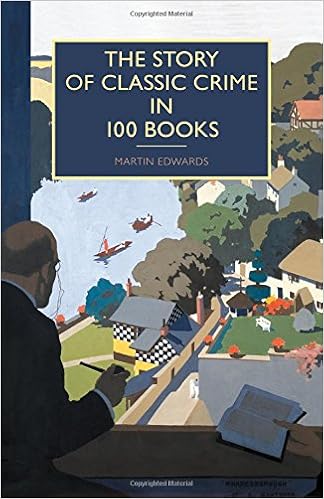
Book of the week: The Story of Classic Crime in 100 Books.

What's more fun than a book about books? This particular book traces the history of the Golden Age of Crime Fiction in Britain through 100 different novels. These are books which are considered to be ones that made the greatest contribution to the crime drama genre. It's no surprise that as a result of reading this book my to be read list has grown a whole lot longer. This is a great resource for anyone who wants to dive into the crime genre but isn't sure where to begin.

Friday, May 02, 2014

Daily Links 5-2-14

A huge roundup of links for your weekend enjoyment. In today's edition: learning from Calvin and Hobbes, rethinking the grind, moon shots, Disney and God, and more.

***********

What Calvin and Hobbes has to teach us about the medium and the message. Some really good points in this article particularly in how we share the message of the gospel.

***********

Putting things in perspective: how differently famous landmarks look from a distance (hat tip: Challies)

***********

Some advice on how to write about writing.

***********

The power of doing less: how you can increase productivity by saying no more often. I do think there is something to this idea that we have to force ourselves to be less busy and focus on tasks that are most important and most deserving of our time and energy.

***********

Moon shots:: NASA's Lunar Orbiter Recovery Project has been working since 2009 to recover images taken during the the agency's lunar exploration programs. Some very cool photos in this slideshow.


***********

Helpful hints on how to protect your privacy online.

***********

Say it ain't so: is the Oxford English Dictionary disappearing (at least in print)?

***********

Did Disney prohibit the Frozen songwriters from using the word God in their songs? Not exactly. In fact, the real story is more interesting.

***********

Baseball continues to be a fascinating game. In fact, it's remarkable how in some ways it can be so very predictable. 

***********

And then there is this:

Thursday, April 17, 2014

Daily Links 4-17-14

In today's edition: Reader's Digest Christianity, revisiting the great Dungeons and Dragons scare, confessions of a Christian film critic, the aggregation of marginal gains, and more.

************

Exposing the flaws of Reader's Digest Christianity. Unfortunately this is what too many sermons have started to sound like.

************

How do I talk to my teenage daughter? This is a struggle that every father of girls faces.

************

The 4 Stages of Writing and 3 Common Mistakes We Make. I can relate to every bit of this article (particularly the mistakes).

************

Recalling the great 1980s panic about Dungeons and Dragons. I recently shocked my kids when I confessed to them I had played the game (more than a few times) when I was younger. Somehow I managed to survive. (Hat tip: Challies)

************

12 Places in Pixar movies that exist in real life. Some of these are less obvious than others.

************

This is an interesting read: Confessions of a Christian Film Reviewer:

If it’s a challenge to write about Christian films as a Christian, it can be just as problematic to review nonreligious films, especially the bad ones: The humility and loving kindness I try so hard to cultivate in my daily life doesn’t hew to the snark and downright cruelty that can be the occupational hazard of the reviewer’s job. Where I’ve become much more unforgiving, however, is in depictions of violence. As a student of film history, I know that violence is a long-standing, even essential element of cinematic grammar and audience catharsis; as a Christian, I find it increasingly difficult to accept portrayals of brutality that are glib, meaningless, played for laughs or cynically nihilistic. As Underhill wrote, “We cannot begin the day by a real act of communion with the Author of peace and Lover of concord, and then go on to read a bloodthirsty newspaper at breakfast.” If a bellicose tabloid is enough to give peace-lovers a case of indigestion, they should try watching a Quentin Tarantino film on an empty stomach.

Hat tip: Breakpoint

************

How to keep your marriage strong. These are great tips. #5 is the one I find the hardest.

************

This is very interesting: the aggregation of marginal gains. Having the patience to make small changes will result in bigger changes.

Wednesday, April 02, 2014

Daily Links 4-2-14

In today's edition: churches remade to become bookstores, things good dads say, notes to write to change your life, and more.

************

What happens when a church building is abandoned? In some cases, they are converted to libraries and bookstores with magnificent results. (Hat tip: Book Riot)

Selexyz Dominicanen by Merkx + Girod in Maastricht, the Netherlands


***************

A brief and fascinating history of one of the most popular game shows of all time: Jeopardy!

***************

Some excellent advice to fathers in this article entitled 7 Things a Good Dad Says.

***************

More unexpected ways to work smarter, not harder. Some good advice here and things that I will have to think about.

***************

This is interesting: scholars are studying Shakespeare's works to determine what his beliefs are about God.

***************

The idea of writing notes seems a little old-fashioned, but here are five notes to write that could change your life.

***************

Can you summarize the American Revolution in a tweet? A group of historians gave it a try.

Friday, March 28, 2014

Daily Links 3-28-14

Returning just in time to provide you with some interesting reading for your weekend: where is the next James Madison, choice rather than more spending will fix education, an anniversary surprise, and more.

*************

Where is the next James Madison? An article well worth reading and thinking about from Erich Bridges.

*************

Making the case for school choice:

The alternatives to traditional public schools differ in many ways, but they all discard the idea of government dictating where students go to school, how money is spent and what's being taught. 
Instead, students and their parents pick the schools. Money goes with the student. Schools survive and prosper by doing a better job of educating. If they don't deliver, the students will find another school, taking the money with them. 
Students will be better served in private schools run like businesses. There's no reason to shy away from what this means: operating for profit, replacing principals with CEOs, paying good teachers more, firing bad teachers, giving schools freedom to innovate in instruction methods and curriculum, letting new schools enter the market, allowing bad schools to fail, encouraging successful schools to take over unsuccessful ones, getting rid of unions that protect bad teachers and stifle change. 
 Hat tip: Glenn Reynolds, who also wrote a terrific book on this subject.

**************

Not that there is any doubt in my mind but here's 4 reasons why real books are better than e-books. (via Aaron Armstrong)

**************

Anyone who is a fan of Sherlock Holmes knows all about his arch enemy Professor James Moriarty. But was he a real person?

***************

Give the Tampa Bay Rays credit: they know how to help a couple celebrate an anniversary.

***************

And while we're on the subject of baseball, this book is at the top of my reading list:
Here's an early review of the book. Thanks to the author for the tip.

*************

Want to become a better writer? Try copying the work of others.

*************

Some very odd and specific rules from libraries.

Thursday, February 27, 2014

Daily Links 2-27-14

In today's edition: why dads matter, fun food facts, solving a Toy Story mystery, and more.

************

The Atlantic discovers that dads really do matter. The statistics are tough to ignore. Kids who grow up in families where both mom and dad are at home are likely to be more successful than kids that grow up in single parent homes.

************

Raymond Chandler's timeless advice for writing a detective novel. 

************

Just for fun: a steampunk TARDIS and Dalek.
via Neatorama

************.

Unraveling the mystery surrounding the identity of Andy's mom in Toy Story.

************

12 Fascinating Food Facts
[Source: Today I Found Out]

Thursday, February 06, 2014

Daily Links 2-6-14

In today's links: was a Christian film a victim of bias, how to become a professional author, how Christians should engage culture without falling into the fundamentalist trap, and more.

************

I previously noted that Alone Yet Not Alone was honored with an Oscar nomination for best song. But not long after the film was honored the Academy decided to rescind the nomination based on the efforts by the song's producer to lobby Academy members for votes. But his behavior does not seem to be all that different from many other producers. This begs the question whether the film was really victim of some anti-Christian bias in Hollywood.

Related: the producer of Schindler's List says the Oscars are bigoted. Perhaps there is something there after all.

*************

There's been an ongoing discussion in evangelical circles about how to properly engage the culture and how much we can safely engage before running the risk of sin. Now, Aaron Earls weighs in with some further observations as well as a word of caution for all concerned.

**************

A good read from Relevant Magazine: the most damaging attitude in our churches.

*************

Seven ways to judge the effectiveness of your church. Notice that none of these are how many people show up for Sunday morning services.

*************

Some advice on becoming a professional author from Dave Barry. Hilarious.

*************

Loads of surprises to be found in these special edition LEGO sets. Fun stuff.

*************

Thursday, January 30, 2014

Daily Links 1-30-14

In this morning's edition: a softer prosperity gospel, should you go to college, why Christians should create, and more.

*****************

Dealing with the problem of the prosperity gospel: In some instances it's easy to spot a prosperity gospel preacher. But there is also a more subtle form of the prosperity gospel that is sometimes a little more difficult to spot. A good rule of thumb is that if anything is being preached other than Scripture it should be cause for concern. This guide of nine marks of a prosperity gospel church can help discern whether a church is in error. Finally, here's a good way to figure out if you're reading a book by a prosperity gospel preacher.

*****************

What's wrong with higher education? It's a matter of trust. The key question is whether college can deliver on what it promises to students. Increasingly, that answer is no. That begs the question of whether a student should go to college at all. Matt Walsh argues that college isn't for everyone and that (at least in  his case) he was better off not going to college at all. (Hat tip: Instapundit) Perhaps we should be shifting our focus from thinking kids have to go to college to whether it's really beneficial for them to do so. After all, with the cost of college skyrocketing we have to look at the costs versus the benefits to decide whether it's the right thing to do.

*****************

Three time management principles to increase your productivity. It's often the simplest of things that can make the biggest impact.

*****************

10 writing tips from acclaimed novelist P. D. James. Some good food for thought.

*****************

Why Christians should create art:

To those of us trying to live out our beliefs, art can seem dangerous because the art of our culture preaches the beliefs of the culture, and many of these beliefs run counter to the Christian values we hold. But our goal should not be to avoid “secular” art and media, or merely take art as it's given to us and try to fix it, but to create our own art that is unique, meaningful and paradigm-shifting. 
Far from sticking to the conventional standards of “Christian” art, Christian artists should be willing to take risks, to express their deep-seated beliefs and convictions in their own ways. For Christians, art is taking part of the material world and making it sacred with our expression of love and devotion to God. The aesthetic isn't what makes it Christian, the artist's purpose does.

Monday, January 27, 2014

Daily Links 1-27-14

Good morning. Here are a collection of links to help get your week off to the right start. In today's edition: planning for the worst, too much media is bad for your brain, classic time management advice, and more.

******************

Some sage advice on dealing with temptation from Tim Challies:

Some time ago we implemented a plan in our home to protect the kids from some of what lurks out there on the Internet. We removed Internet access from some devices, limited it on others, and applied filters that keep tabs on what we are doing online. It has been very smooth from a technological perspective, but a little less so on the interpersonal level. 
Recently my son said, “Dad, you’re treating me like I’m addicted to pornography. But I haven’t ever seen it and don’t want to see it!” And he’s right, to some degree. If I’m not treating him like an addict, I am at least treating him like a pre-addict, someone who has the inclination, or who may well have it before long. In this way I think I understand him a little better than he understands himself. Of course our Internet plan is not designed only to protect the children from exposure to pornography, but that is still one of its major purposes. 
But his exasperation and hurt feelings gave us opportunity to talk about one of the principles I have found helpful in my own life: When you are at your best, plan for when you are at your worst. I see this as an application of 1 Corinthians 10:12-13: “Therefore let anyone who thinks that he stands take heed lest he fall. No temptation has overtaken you that is not common to man. God is faithful, and he will not let you be tempted beyond your ability, but with the temptation he will also provide the way of escape, that you may be able to endure it.”

Be sure to read the whole thing,

*****************

Kathy Harris has a wonderful interview with one of my favorite historians, Jane Hampton Cook, about her book American Phoenix.

*****************

More proof that too much media consumption can make you crazy: five mental disorders caused by media.

*****************

Some classic time management advice worth revisiting. I've heard this same speech given by a time management guru and have long thought it was one of the best pieces of advice I had ever heard.

*****************

This is spot on:

*****************

Timeless advice from famous authors on writing. The cool thing about this page is that it is constantly being updated with additional links.

Tuesday, January 21, 2014

Daily Links 1-21-14

Bite size commentary delivered daily. In today's edition: The Great Divorce on stage, how to know God's will, biblical messages in Frozen, and more.

*****************

Coming soon to a theater near you: a stage adaptation of C. S. Lewis' The Great Divorce. Though his Narnia books have garnered much more attention over the years because of the movie adaptations, I think this is one of his more underrated books. This could be a very promising play.

Hat tip: Breakpoint

*****************

Finding God's will is a lot easier than you think:

Discovering God’s will is one of those topics that Christians (at least, North American ones) never seem to tire of. We want to know if what we’re doing is what God wants for us, his “best” for us, if you will. There are tons of books on the subject (only a couple that are worth reading in my opinion, though), lots of sermons and blog posts. And, honestly, if you read most of them, you’d think there was some sort of big secret—that God was leaving his will for our lives shrouded in mystery. 
A mystery you must solve in order to have your best life now™. 
Or something.
But God has not left us to flounder on this, as if we were to wander about aimlessly with no hope of finding an answer. But he’s also not provided an answer that will satisfy some to the degree they’d like. Instead, God directs us to his word, where he’s pretty clear-cut about no less than five things that are his will for our lives, which are helpfully detailed in John MacArthur’s book, Found: God’s Will and Kevin DeYoung’s Just Do Something
*****************

6 questions writers should ask. Some good advice for anyone who wants to write effectively.

*****************

One of the surprising things about Disney's Frozen (which we really enjoyed) is that it has some biblical truth embedded in the story. I hadn't really thought about it until I read the article. (Hat tip: Home Front)

*****************

When a friend is in crisis what's the best thing to do?

The start of a New Year always seems to bring with it a sense of promise, a renewed hope that life will somehow get better or easier or lovelier. When the first of January came to pass last year, I had a lot of expectations for what the next twelve months would hold. I prayed for new mercies, new opportunities, new avenues for service. 
While several months were marked by those truths, the beginning half of the year was also characterized by a lot of difficulty, hurt and overwhelming loss—not on a personal level, but for those close to me, those I care deeply about. 
Numerous friends grieved the loss of one or both parents. and multiple couples I know lost a child at birth. While some faced newfound unemployment, others have struggled tirelessly but are still unable to find work. I have friends mourning broken relationships—familial, romantic or otherwise. It’s all incredibly confusing, and yet the heartache is all too real. 
Knowing what to say at these times presents us with a challenge. A sentiment doesn’t exist that can change the current condition. As hard as we search for the most consoling words, they still feel empty, they come up short. I learned an important lesson years ago that has never failed me, a phrase that is my North Star in any and all circumstances. It’s a simple truth, which I believe resonate with us the most. It’s one thing true friends do, even when they can’t do anything else. 
Show up.

Be sure to read the whole thing.

Friday, January 10, 2014

Daily Links 1-10-14

Here's a huge roundup of links to get your weekend started off right: some unusual things that have traveled into space, some neat history, perfect spaghetti marinara, and more.

*****************

Over at Mental Floss, a list of 9 unusual things that astronauts brought into space. My personal favorite is the Silver Snoopy Lapel Pin.

*****************

An interview with Glenn Harlan Reynolds over at National Review about the state of higher education and, of course, his new book.

*****************

I always thought the first submarines appeared during the Civil War. Turns out I was wrong. The first submarine was actually invented during the Revolutionary War.

*****************

Tips for becoming a successful writer.


****************

Kevin DeYoung shares the Ten Commandments of Twitter. Some great advice in this post.

****************

Chef Scott Conant shares his secrets for making the perfect spaghetti marinara. I've had this dish at Scarpetta Las Vegas (incidentally, one of the best meals I have ever had at a restaurant) and it is fantastic. If you start making spaghetti this way you will never want to prepare it any other way. Trust me on this.

****************

Is it possible to be a comedian without swearing or talking about sex? Jerry Seinfeld proves that it can be done. (Hat tip: Acculturated)

****************

A collection of nine sentences guaranteed to make a grammar nerd's head explode. English is tough.

Monday, December 30, 2013

Daily Links 12-30-13

Good morning. Here are a collection of links that will help start your week off right. In today's edition: minimalist Disney posters, the art of conversation, reflections from Richard Sherman, and more.

*****************

A really cool collection of minimalist Disney posters.


Hat tip: Neatorama

****************

Seven weird (and sometimes dangerous) ways that kids amused themselves before video games.

****************

Author Sherry Turkle is on a mission to save the lost art of conversation:

The conclusion she’s arrived at while researching her new book is not, technically, that we’re not talking to each other. We’re talking all the time, in person as well as in texts, in e-mails, over the phone, on Facebook and Twitter. The world is more talkative now, in many ways, than it’s ever been. The problem, Turkle argues, is that all of this talk can come at the expense of conversation. We’re talking at each other rather than with each other.
Conversations, as they tend to play out in person, are messy—full of pauses and interruptions and topic changes and assorted awkwardness. But the messiness is what allows for true exchange. It gives participants the time—and, just as important, the permission—to think and react and glean insights. “You can’t always tell, in a conversation, when the interesting bit is going to come,” Turkle says. “It’s like dancing: slow, slow, quick-quick, slow. You know? It seems boring, but all of a sudden there’s something, and whoa.
Occasional dullness, in other words, is to be not only expected, but celebrated. Some of the best parts of conversation are, as Turkle puts it, “the boring bits.” In software terms, they’re features rather than bugs.

Hat tip: Acculturated

*****************

Speaking of conversation, here is some timeless advice on the art of conversation from 1866.

*****************

Richard Sherman reflects on what it was like to work on bringing Mary Poppins to the screen with her creator, P. L. Travers:

"Nobody knows the Sturm und Drang we went though," said a vigorous Mr. Sherman last month, sitting near his two Oscars and assorted other honors in the library of the spacious Tudor-style house he has lived in for some 40 years. "Let me make a calculated understatement: She was a very difficult woman. It was awful to be in a room where everything you said was contradicted. She made us feel terrible constantly. But Walt said: 'Don't let her get to you. Just keeping doing what you do.'" 

As depicted in "Saving Mr. Banks"—and corroborated on audio tapes made at her insistence during story conferences—Travers was as determined to exclude songs or animation from any adaptation of "Mary Poppins" as Disney was to include those very things. "She didn't recognize that her character lent itself to a musical," Mr. Sherman recalled. "She had no imagination for other mediums, just the page. We added to what she had already created."

Travers wrote eight "Mary Poppins" books before she died, at age 96, in 1996, but in the 1960s there were only five—all loose collections of vignettes ill-suited, in their original form, to screen adaptation. "Everybody thinks Mrs. Travers wrote the story for the film, but it was Don DaGradi and Bob and Dick Sherman who wrote it," Mr. Sherman said. "Walt asked us to read the first book and tell him what we thought. We knew the gauntlet had been thrown. But these stories had no plot, so we created a viable storyline. And then Bill Walsh came in and made a great screenplay with Don."

***************

Three influential writers share why they blog. I think folks will start blogging for any number of reasons and all three have some interesting things to say about writing and why they have chosen to blog.

Monday, December 23, 2013

Daily Links 12-23-13

A roundup of links to get your week off to a great start. In today's edition: the pros and cons of the new NIV, hilarious warning labels, advice on being a better writer, and more.

*****************

This is a great side-by-side comparison of the original 1984 NIV and the 2011 updated NIV. I still have a 1984 NIV and will use it from time to time in my own personal Bible study. However, I am not comfortable with the new NIV for reasons that are well documented in this article. (Hat tip: Challies)

*****************

Via Neatorama, a hilarious collection of warning labels. It's sad to think that we have declined to a point in this country where such labels are necessary.

*****************

It's not politically correct to say so but the fact is that both boys and girls do better when their father and mother are together. It's even more politically incorrect to point out that it's the boys who suffer disproportionately when the family disintegrates.

*****************

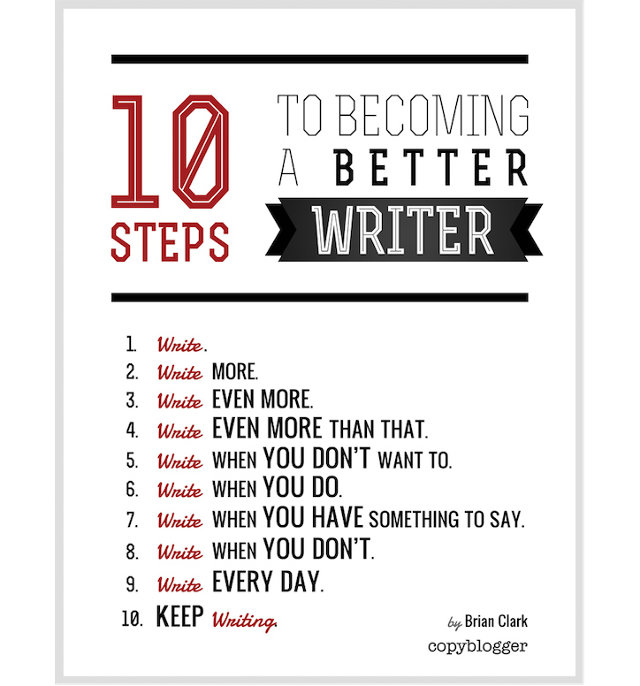
Here are six pieces of advice from successful writers on how to become a better writer. The first step is easy. Write. Then write some more. Repeat.

*****************

From the Smithsonian, the wonderful history of the crossword puzzle which just turned 100.

*****************

Before there were e-books, paperback books turned the publishing world upside down.

*****************

Finally, Opening Day of the 2014 Major League Baseball season is still a few months off but here's a little something that makes me wish it was back a lot sooner: a 1998 clip of Vin Scully singing "Take Me Out to the Ballgame".


Wednesday, December 18, 2013

Daily Links 12-18-13

Good morning! In today's roundup of links: bestowing a long overdue honor, surprising ways to make decisions, Frozen, Saving Mr. Banks, Tim Keller on pastors who write books, and more.

*****************

Tony LaRussa, Bobby Cox, and Joe Torre are all being inducted in the Baseball Hall of Fame next year for their managerial careers and rightly so. But there's another inductee who is receiving some long overdue recognition as well: Roger Angell. Follow the link for a sampling of his terrific work. (Hat tip: Book Riot)

*****************

Six surprising ways to make decisions. It's an interesting list.

*****************

Another interesting review of Mansfield's Book of Manly Men: An Utterly Invigorating Guide to Being Your Most Masculine Self.  Perhaps most interesting is that it is written by a woman.

*****************

Disney celebrates sisterly love in Frozen. Haven't seen it yet (at least as of the writing of this post) but plan to take the family soon.

*****************

Speaking of Disney, another movie I am looking forward to seeing is Saving Mr. Banks. Here's a list of 10 things you should know about this real life story.

*****************

Tim Keller on whether pastors should consider writing as part of their ministry and when they should start to write books:

Pastors can write as a valid part of pastoral ministry. It is part of the ministry of the Word. The ministry of the Word does not mean only the spoken word. But when they should write is the question.
I don't think ministers should produce much in the way of book-length writing in the first half or even two-thirds of their ministry. Why? 
1. Because they are still growing in their wisdom and understanding of the Word, and they are likely to change their mind on some things. 
2. Because (yes) it will distract them from the two main ways they can grow into wise and skillful ministers with something to say. Those two things are regular preaching/teaching and a lot of pastoral involvement. 
3. I think younger ministers should earn their credibility through building up some fruitful and effective ministries. That takes literally all one's time for a long time. They should not divert valuable time for ministry to writing. I know that if a young minister sees his church grow rapidly he will be bombarded with offers to write books, but even if his church grows to thousands of people by the time he is in his early 30s, he is still not really time-tested, nor does he yet have the insights and knowledge of the Bible he will have later.
4. If you wait to write until you are older, the writing will go much faster, because you will have reams of material and many layers of thought about a lot of subjects and texts. Writing a book in your 50s will go twice as fast and be twice as good as if you try the same book in your 30s. It's just good stewardship to wait.

Hat tip: Justin Taylor via Twitter

Wednesday, December 11, 2013

Daily Links 12-11-13

A daily roundup of interesting things found on the web. In today's edition: two perspectives on preventing an affair, ghostwriters, pastors who write books, thoughts on modesty, and more.

*****************

Two different perspectives on preventing an affair. First, Tim Challies shares some thoughts from a recent conference. Then the Christian Pundit weighs in with a female's perspective. Both of them make an important point: as with any other temptation, it is important to be proactive in dealing with sin. Thus it is best to have a strategy for dealing with temptation when it arises. (Related recommended resource: Hedges by Jerry Jenkins).

*****************

This is an interesting infographic:


Homeschooled: How American Homeschoolers Measure Up
Source: TopMastersInEducation.com

*****************

This is an interesting take on modesty and an attempt to debunk some of the myths surrounding it. I'm always fascinated to hear a woman's perspective on this issue.

*****************

Aaron Armstrong shares a few thoughts on the dangers of ghostwriting. I was not aware how common a practice this is in evangelical circles. In a related post, Kevin DeYoung has a few words for pastors who write. Two quotes worth highlighting:

There is nothing wrong with being a writer first, but that’s simply not the calling of a pastor. I need to be a faithful preacher and a caring shepherd before I am a good writer. I’m very fortunate to have a church that values study and supports me in my writing. But I owe it to them, and to my calling as a pastor, to make sure that I do not become an author who pastors a church on the side.

Agreed. I wonder about pastors who are prolific writers and how they can manage to churn out books and shepherd a church at the same time.

Then there is this:

Whether in sermons or in print, it’s not okay for pastors to take credit for something that is not theirs. Granted, the lines can be blurry. But that doesn’t mean the line doesn’t exist. And just because it feels like the sin of sloth more than the sin of theft doesn’t make it less of an error.

Having personally encountered this situation I can tell you that this is a huge problem. Our churches need to be holding our pastors accountable to prepare their own sermons.

Monday, December 02, 2013

Daily Links 12-2-13

Good morning. Here are a few links to help start out your week. In today's edition: how to use e-mail more efficiently, learning from Ananias and Sapphira, how to be amazing at work, and more.

***************

The sudden deaths of Ananias and Sapphira in Acts 5 should serve as a warning to Christians. J. D. Greear offers five lessons we should take away from this story.

***************

Productivity hack: using an e-mail autoresponder to help manage your inbox more efficiently. The beauty of this hack is it eliminates the need  for you to respond immediately and helps manage expectations of when people can expect to hear from you.

***************

Some very cool Dr. Who themed tea swag.
The TARDIS tea pot. Yes, it's bigger on the inside.
*****************

Five tips on how you can stand out from the crowd at work.

*****************

In 1963, 16 year-old Bruce McAllister was sick of hearing about symbolism in novels. But rather than argue with his teacher about it he went to the source: he wrote to 150 novelists and asked them about symbolism in their own novels. Amazingly, he got quite a few responses. Just goes to show it pays to correspond with novelists.

*****************

25(!) brand names that are used as everyday words. I didn't realize that there were that many.

Friday, November 22, 2013

Daily Links 11-22-13

Five for Friday: a roundup of links today on writing (plus a bonus recommendation on how to deal with rejection).

**************

From Brain Pickings: Ernest Hemingway's advice for aspiring young writers. This includes a great excerpt from Ernest Hemingway on Writing. Be sure to scroll to the end of the post for links to more writing advice.

**************

How to write things the people you lead will want to read. This is a great article including three common mistakes people make and how to fix them.

**************

Since 2005, the SAT has included an essay section. What's the key to doing well on this part of the test? Make stuff up!
This essay, which was added to the SAT in 2005, counts for approximately 30 percent of a test-taker’s score on the writing section, or nearly one-ninth of one’s total score. That may not seem like much, but with competition for spots at top colleges and universities more fierce than ever, performance on a portion of the test worth around 11 percent of the total could be the difference between Stanford and the second tier. So it’s not surprising that students seek strategies and tips that will help them succeed on the writing exercise. Les Perelman, the recently retired former director of MIT’s Writing Across the Curriculum program, has got a doozy. 
To do well on the essay, he says, the best approach is to just make stuff up. 
“It doesn’t matter if [what you write] is true or not,” says Perelman, who helped create MIT’s writing placement test and has consulted at other top universities on the subject of writing assessments. “In fact, trying to be true will hold you back.” So, for instance, in relaying personal experiences, students who take time attempting to recall an appropriately relatable circumstance from their lives are at a disadvantage, he says. “The best advice is, don’t try to spend time remembering an event,” Perelman adds, “Just make one up. And I’ve heard about students making up all sorts of events, including deaths of parents who really didn’t die.” 

As a result, the SAT is helping us create bad writers.

**************

A related problem is that college graduates don't know how to write.

Our graduates lack writing skills. While adept at crafting bullet points, they often have difficulty writing in declarative sentences and complete paragraphs – thus impeding the effectiveness of their business communications, including memos, letters, and technical reports. 
A 2004 Conference Board survey of 120 corporations in the Business Roundtable concluded that most companies take written communications into consideration when making their hiring and promotion decisions and implied that many current or prospective employees lack the requisite skills. This conclusion was reinforced by a 2006 Conference Board survey of 431 human resource professionals, which cited writing skills as one of the biggest gaps in workplace readiness. 
Recent graduates also frequently commit basic grammatical errors, such as using an improper pronoun (e.g. “between you and I”) selecting the wrong homonym (e.g. “compliment versus complement”) or employing incorrect diction (e.g. “appraise versus apprise”). Not coincidentally, these kinds of errors are difficult to catch with spell-check. 

**************

But there is hope. Here are 10 tips how to write less badly.

**************

As an added bonus, a great quote from Barbara Kingsolver on dealing with rejection:


Friday, November 08, 2013

Daily Links 11-8-13

A bookish roundup of links to start off your weekend: a cool bookmark, why you should write in your books, a really neat audiobook you can listen to for free, and more.

*****************

I love this bookmark....


You can find more neat designs here. (Hat tip: Book Riot)

*****************

Here are five reasons you should write in your books. I've never been in the habit of writing in my books but this makes a fairly good case for doing so.

****************

Although C. S. Lewis is probably best known as a theologian I think his fiction books are his best works. One of my personal favorites is The Screwtape Letters. One of the earliest audio editions was narrated by none other than John Cleese. You can listen to all of it for free here.

***************

Ernest Hemingway is arguably one of the greatest writers of the 20th Century. Although he never wrote about how to write fiction he did mention the subject in a number of letters, articles, and books. Here are seven of his best tips on how to write fiction.

***************

Here's a terrific list of books on reading and writing.

***************

If you live in Copperas Cove, Texas, you better return your books to the library on time or end up in jail:

An ordinance adopted by the City of Copperas Cove could mean an arrest for patrons if they don't return library materials.
A recent case landed one man behind bars for a book he'd had checked out for more than three years.
On Wednesday Jory Enck was booked into jail and released for overdue library materials.
Court documents show he checked out a GED study guide in 2010 and didn't respond to attempts from the library to get the book back.

I have heard of extreme penalties for overdue library books but this seems like a little bit much.

***************

Fans of Jane Austen beware: there is a new updating of Sense and Sensibility coming to bookshelves soon. While it's a popular thing to attempt, there are several pitfalls writers would do well to avoid.

***************

Here's a list of 9 books that you should drop everything to read right away.

***************

This is without a doubt one of the coolest bookstores you're likely to find anywhere. The Dutch really know how to make the most of an abandoned church:


Details (and more photos) here.